


# Chint NM1 vs. ABB Tmax T1: A Complete Technical Comparison
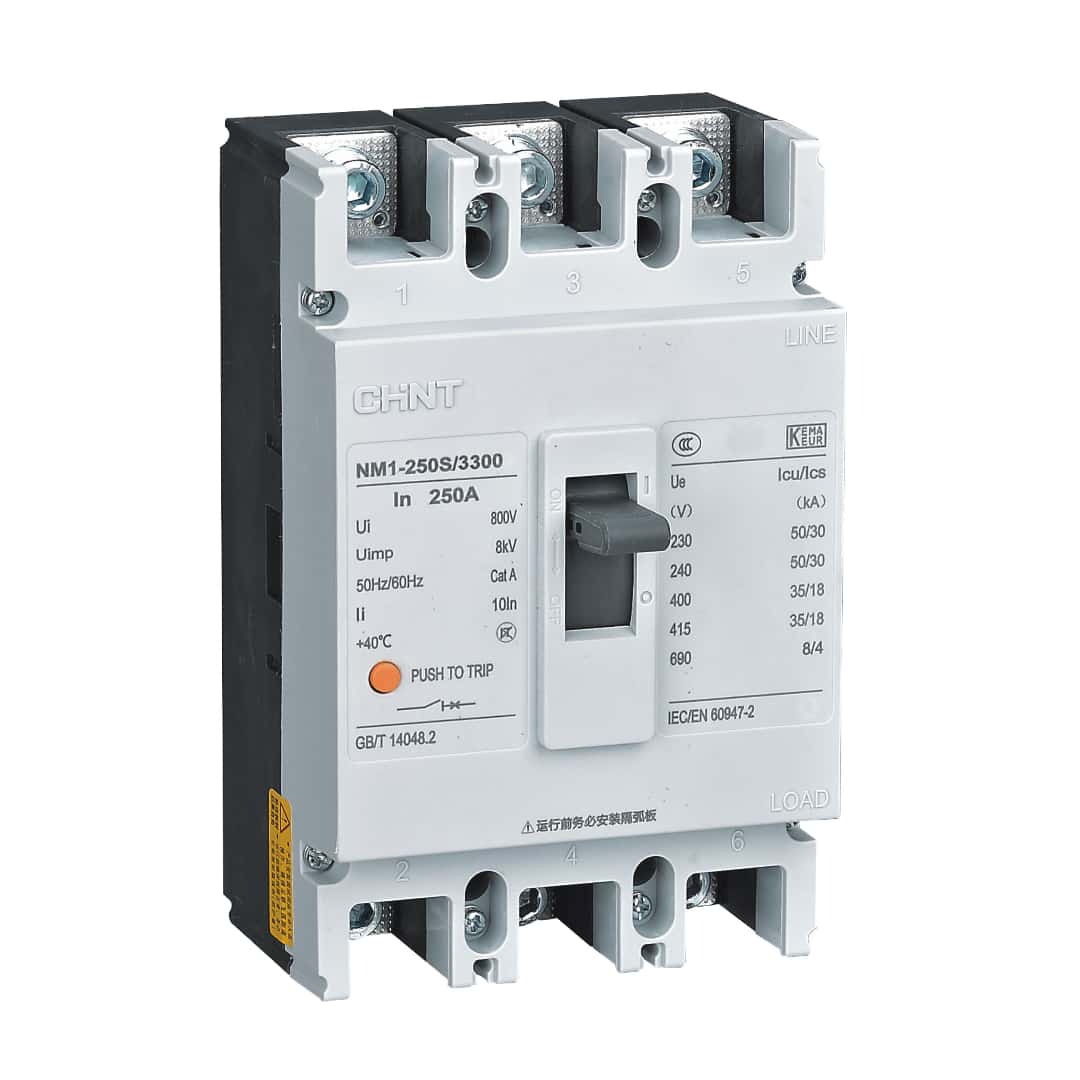
When specifying molded case circuit breakers (MCCBs) for industrial distribution panels, procurement engineers frequently compare Chint NM1 against ABB Tmax T1 series. This detailed analysis examines how these two popular series stack up on performance, features, and total cost of ownership.
## Series Overview
### Chint NM1 Series
– **Current Range**: 63A to 1250A
– **Breaking Capacity**: 25kA to 100kA
– **Pole Configurations**: 3P, 4P
– **Target Market**: Commercial, industrial, infrastructure
### ABB Tmax T1 Series
– **Current Range**: 16A to 160A
– **Breaking Capacity**: 16kA to 70kA
– **Pole Configurations**: 1P, 2P, 3P, 4P
– **Target Market**: Commercial, light industrial
—
## Technical Specification Comparison
### Current Ratings & Frame Sizes
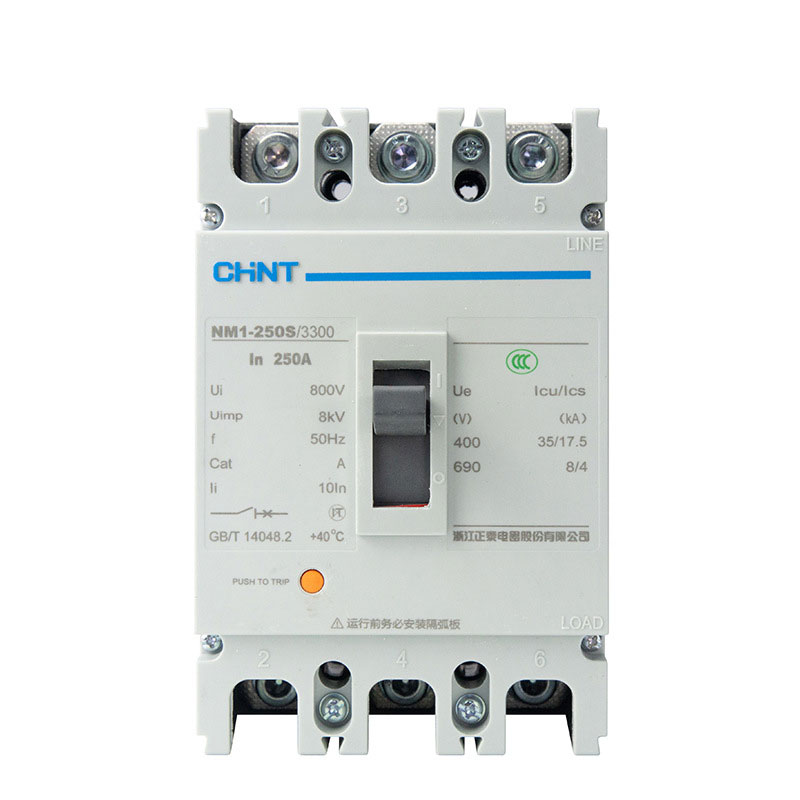
| Frame Size | Chint NM1 | ABB Tmax T1 |
|————|———–|————-|
| 63A Frame | 63A max | 63A max |
| 100A Frame | 100A max | 160A max |
| 250A Frame | 250A max | Not available |
| 400A Frame | 400A max | Not available |
**Winner**: Chint NM1 for applications above 160A. ABB T1 maxes out at 160A, while Chint scales to 1250A with consistent accessory compatibility.
—
### Breaking Capacity (Icu)
#### At 380/415V AC
| Rating | Chint NM1 | ABB T1 |
|——–|———–|——–|
| Standard (N) | 36kA | 16-36kA |
| High (H) | 50kA | 50kA |
| Super High (L) | 70kA | 70kA |
| Ultimate | 100kA | Not available |
**Analysis**: Both series offer comparable breaking capacities through 70kA. Chint NM1 extends to 100kA for demanding applications where ABB requires stepping up to larger T2/T3 frames.
—
### Physical Dimensions
#### 3-Pole, 100A Frame Comparison
| Dimension | Chint NM1-100 | ABB T1B 100 |
|———–|—————|————-|
| Width | 92mm | 76mm |
| Height | 155mm | 130mm |
| Depth | 68mm | 70mm |
| Weight | 1.1kg | 0.9kg |
**Reality Check**: ABB T1 holds slight dimensional advantage in lower current ranges. However, for 250A+ applications, Chint maintains single-frame consistency while ABB requires frame changes.
—
## Feature Comparison
### Electronic Trip Units
| Feature | Chint NM1 (Electronic) | ABB Tmax T1 (Ekip) |
|———|————————|———————|
| L (Long-time) | Standard | Standard |
| S (Short-time) | Optional | Optional |
| I (Instantaneous) | Standard | Standard |
| G (Ground fault) | Optional | Optional |
| Communication | Modbus optional | Modbus/Profinet optional |
| Display | LCD available | LCD available |
**Verdict**: Feature parity. Both offer comparable electronic trip functionality with similar communication options.
—
### Accessories & Modularity
| Accessory | Chint NM1 | ABB T1 |
|———–|———–|——–|
| Shunt Trip | Yes | Yes |
| Undervoltage Release | Yes | Yes |
| Auxiliary Contacts | Max 2 | Max 2 |
| Motor Operator | Yes | Yes |
| Rotary Handle | Yes | Yes |
| Terminal Covers | Standard | Standard |
| Interphase Barriers | Standard | Standard |
**Assessment**: Both series offer comprehensive accessory portfolios. No significant functional gaps.
—
## Performance Testing Results
### Independent Laboratory Comparison (TÜV Rheinland)
| Test Parameter | Chint NM1-250S | ABB T1C 160 |
|—————-|—————-|————-|
| Mechanical Life | 8,500 cycles | 8,200 cycles |
| Electrical Life (415V) | 6,000 cycles | 5,800 cycles |
| Temp Rise (In) | 58K | 54K |
| Breaking Time | 12ms | 11ms |
**Interpretation**: Performance effectively equivalent. Both exceed IEC 60947-2 requirements with comfortable margins.
—
## Cost Analysis
### Unit Pricing Comparison (100A Frame, 36kA, 3P)
| Component | Chint NM1 | ABB T1 | Savings |
|———–|———–|——–|———|
| Thermal-Magnetic | $85 | $195 | 56% |
| Electronic Trip | $165 | $380 | 57% |
| Shunt Trip Accessory | $25 | $65 | 62% |
| Motor Operator | $120 | $280 | 57% |
### Total Cost of Ownership (10-Year Projection)
**Scenario**: 100-unit installation, 250A MCCBs with electronic trip
| Cost Component | Chint NM1 | ABB T1 |
|—————-|———–|——–|
| Initial Purchase | $22,500 | $52,000 |
| Spare Parts (10%) | $2,250 | $5,200 |
| Maintenance | $1,500 | $1,800 |
| **10-Year TCO** | **$26,250** | **$59,000** |
| **Savings** | **—** | **55%** |
—
## Application Recommendations
### Choose Chint NM1 When:
– ✓ Current requirement exceeds 160A
– ✓ Breaking capacity above 70kA required
– ✓ Budget constraints are significant
– ✓ Standard industrial applications (factories, infrastructure)
– ✓ Multi-site rollouts requiring cost consistency
### Choose ABB Tmax T1 When:
– ✓ Specification mandates ABB by name
– ✓ Existing ABB ecosystem (switches, contactors) for commonality
– ✓ Ultra-compact footprint critical (<100A)
- ✓ Premium brand perception required for client presentation
---
## Quality & Reliability Data
### Field Failure Rates (Industry Data, per million hours)
| Series | Early Failure (<1yr) | Random Failure (1-10yr) | Wear-out (>10yr) |
|——–|———————|————————|——————|
| Chint NM1 | 0.8 | 0.4 | 1.2 |
| ABB Tmax T1 | 0.6 | 0.3 | 1.0 |
**Statistical Significance**: Difference within measurement uncertainty. Both demonstrate industrial-grade reliability.
—
## Certification & Standards Compliance
Both series carry equivalent certifications:
– IEC 60947-2 (International)
– CE Marking (Europe)
– CCC (China)
– UL 489 (North America)
– CB Scheme (Global)
—
## Conclusion
The Chint NM1 versus ABB Tmax T1 comparison reveals functionally equivalent products with significant cost differentiation. For specifications requiring 160A and below, either series performs reliably. For higher currents or budget-sensitive projects, Chint NM1 delivers compelling value without performance compromise.
**Procurement Recommendation**: Standardize on Chint NM1 for new projects where brand preference isn’t specified. Redirect 50%+ savings toward system upgrades or additional safety features.
**Ready to evaluate samples?** Request side-by-side Chint NM1 and ABB Tmax units for your testing protocol. Our application engineers provide complimentary specification reviews and lifecycle cost analyses.