


# The Role of Contactors in EV Charging Stations
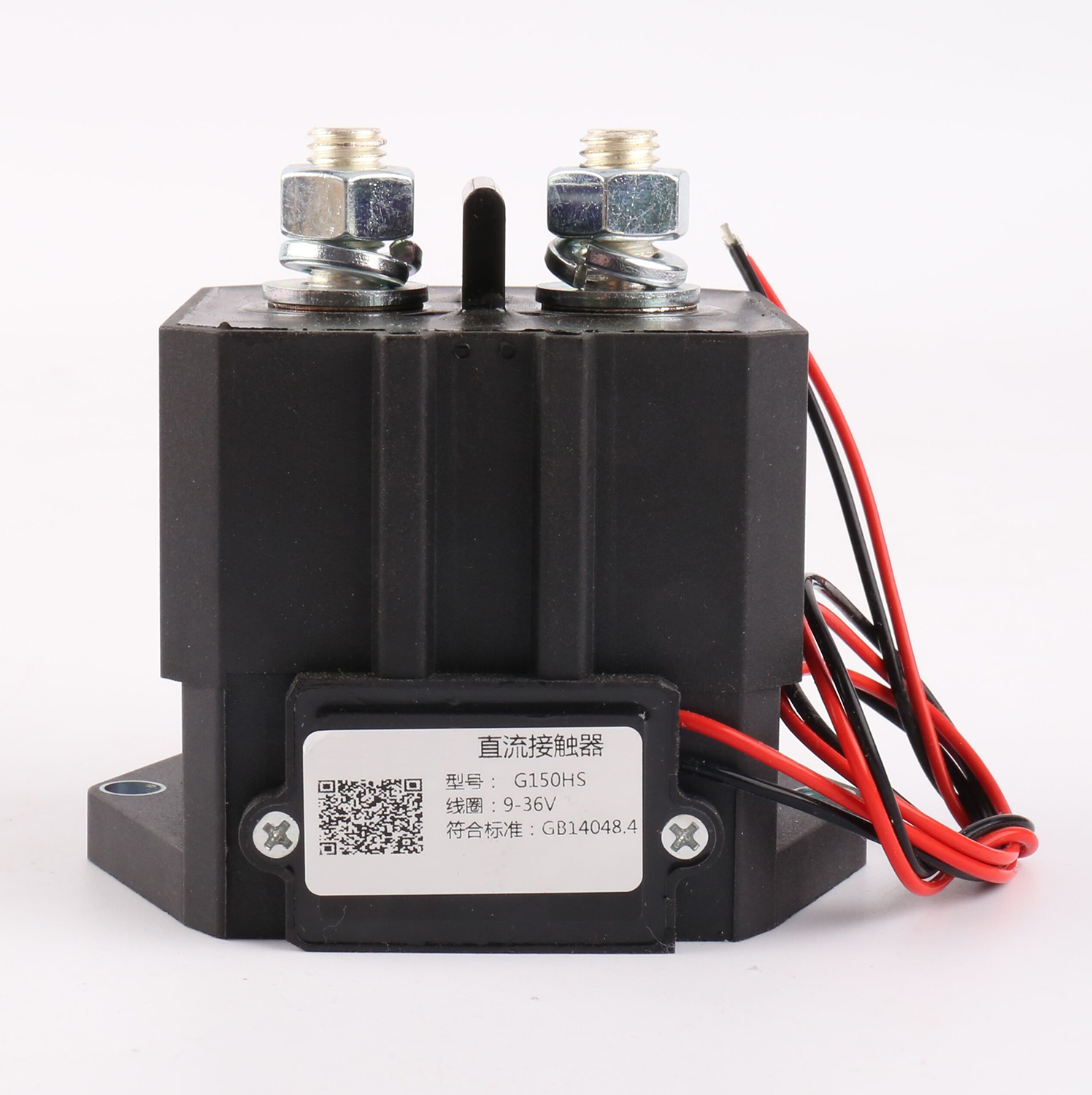
Electric vehicle (EV) charging infrastructure represents one of the fastest-growing segments in the electrical industry. At the heart of every charging station—whether a residential Level 2 unit or a commercial DC fast charger—contactors perform the critical function of safely connecting and disconnecting high-power circuits.
Understanding contactor selection and application in EV charging systems is essential for engineers designing charging infrastructure, contractors installing equipment, and facility managers maintaining these systems.
—
## Why Contactors Are Essential in EV Charging
### The Core Functions
Contactors in EV charging stations serve three primary purposes:
**1. Power Connection Control**
– Connect vehicle to power source when charging session starts
– Disconnect when charging completes or fault occurs
– Enable pre-charge circuits to limit inrush current
**2. Safety Isolation**
– Provide galvanic isolation between grid and vehicle
– Enable emergency shutdown capabilities
– Support failsafe designs (normally open configuration)
**3. Circuit Protection Coordination**
– Work with protection relays to clear faults
– Support arc-flash mitigation strategies
– Enable maintenance isolation procedures
—
## Contactor Applications by Charger Type
### Level 1 Charging (120V AC, 12-16A)
**Typical Application:** Residential trickle charging
**Contactor Requirements:**
– Voltage: 250V AC rating
– Current: 20-30A rating
– Poles: 2-pole (L1, L2/N)
– Type: Standard AC contactor
**Example Product:** LC1D18 18A AC contactor with 120V coil
—
### Level 2 Charging (240V AC, 32-80A)
**Typical Application:** Residential garages, workplace charging, public Level 2 stations
**Contactor Requirements:**
– Voltage: 400-690V AC rating
– Current: 40-100A rating
– Poles: 2-pole or 3-pole
– Features: Auxiliary contacts for control/status
**Key Considerations:**
– Continuous duty rating (100% duty cycle)
– High switching frequency (multiple sessions per day)
– Coordination with EVSE control electronics
**Example Configuration:**
– Main power contactor: 65A, 2-pole, 240V AC coil
– Pre-charge contactor: 10A with series resistor
– Auxiliary: NO contact for “charging active” indication
—
### DC Fast Charging (200-1000V DC, 50-350A)
**Typical Application:** Highway charging stations, fleet depots, commercial sites
**Contactor Requirements:**
– Voltage: 750V-1500V DC rating
– Current: 100-500A rating
– Type: Specialized DC contactor or vacuum contactor
– Poles: Multiple poles in series for high voltage
**Critical Design Factors:**
**1. High Voltage DC Interruption**
– DC arcs are harder to extinguish than AC
– Requires specialized arc chutes or vacuum interrupters
– Multiple contact pairs in series to distribute voltage
**2. Continuous High Current**
– 30-60 minute charging sessions at full rated current
– Significant heat generation
– Requires adequate spacing and ventilation
**3. Frequent Cycling**
– 50,000-100,000 cycle life expectancy
– Minimal contact erosion critical
– Silver-alloy or copper-tungsten contacts preferred
**Example High-Power Configuration:**
“`
DC Fast Charger (350kW, 500V, 700A)
├── Grid Input Contactor: 400A, 1000V AC
├── Rectifier Protection: 800A semiconductor fuse
├── DC Bus Contactors (2× in series): 400A, 1000V DC each
├── Pre-charge Circuit: 50A + 50Ω resistor
└── Vehicle Connector Interlock: Safety-rated contactor
“`
—
## Contactor Types for EV Applications
### AC Contactors (Level 1 & 2)
**Standard Electromagnetic Contactors:**
– **NewTrend LC1D Series:** 9A-150A, 690V AC
– **Chint NC1 Series:** 9A-95A, 660V AC
– **Features:** Economical, proven reliability, wide availability
**Application Notes:**
– Suitable for AC side of onboard chargers
– Standard IEC/UL ratings acceptable
– Coil suppression (varistor or RC) recommended
—
### DC Contactors (Fast Charging)
**High-Voltage DC Contactors:**
| Series | Current | Voltage | Features |
|——–|———|———|———-|
| G50H | 50A | 900V DC | Compact, sealed |
| G250HS | 250A | 1000V DC | High power, EV optimized |
| G300H | 300A | 1000V DC | Heavy-duty fast charging |
| EV200 | 500A | 900V DC | Ultra-high current |
**Critical Specifications:**
– **Bi-directional breaking:** Required for vehicle-to-grid (V2G)
– **Polarity independent:** Some applications require this feature
– **Hermetic sealing:** Protects against environmental contamination
– **Magnetic blowout:** Essential for DC arc extinction
—
## Design Considerations for EV Charging Contactors
### 1. Switching Frequency and Duty Cycle
**Standard AC Contactors:**
– Designed for occasional switching (10-100 cycles/day)
– EV charging: 10-50 cycles/day typical
– Well within standard ratings
**DC Fast Charging Contactors:**
– High-frequency switching during charge session
– PWM-style control in some designs
– Specify contactors rated for frequent operation
### 2. Environmental Conditions
**Outdoor Installation Requirements:**
| Factor | Requirement |
|——–|————-|
| Temperature | -40°C to +85°C operating |
| Humidity | 0-95% RH non-condensing |
| IP Rating | IP54 minimum, IP65 preferred |
| UV Resistance | Required for plastic components |
| Vibration | 5G per IEC 60068-2-6 |
### 3. Safety Standards and Certifications
**Essential Standards:**
– **IEC 61851:** EV conductive charging systems
– **UL 2594:** EV supply equipment
– **IEC 60947-4-1:** Contactors and motor starters
– **SAE J1772:** EV charging connector standard
**Certification Bodies:**
– UL Listed (North America)
– CE Marking (Europe)
– CCC (China)
– ETL/CSA (Alternative to UL)
### 4. Control Circuit Integration
**Modern EVSE Requirements:**
**Coil Voltage Options:**
– 12V DC (common in automotive-derived designs)
– 24V DC (industrial control standard)
– 48V DC (telecom/renewable energy standard)
**Control Features:**
– Coil economy circuits (reduce holding power)
– Electronic coil drives (silent operation)
– Status feedback via auxiliary contacts
– Integration with charging controllers (OCPP protocol)
—
## Pre-Charge Circuit Design
### Why Pre-Charge Matters
Connecting a discharged DC bus to a charged vehicle battery creates massive inrush current (thousands of amps) that can:
– Weld contactor contacts
– Damage vehicle battery management system
– Trip upstream protection
– Reduce contactor life to <100 cycles
### Pre-Charge Circuit Operation
**Step 1: Pre-Charge Phase**
- Small pre-charge contactor closes (with series resistor)
- DC bus charges through resistor (typically 50-200Ω)
- Current limited to <10A
- Duration: 2-5 seconds
**Step 2: Main Connection**
- Main contactor closes once voltage differential <10%
- Pre-charge contactor opens
- Normal charging begins
**Step 3: Disconnection**
- Main contactor opens when charging completes
- Pre-charge resistor dissipates residual energy
### Pre-Charge Contactor Selection
| Parameter | Specification |
|-----------|--------------|
| Current Rating | 10-25A (resistor-limited) |
| Voltage Rating | Match main bus voltage |
| Duty Cycle | Infrequent (1× per session) |
| Special Features | Economizer coil preferred |
---
## Maintenance and Troubleshooting
### Periodic Inspection Checklist
**Monthly:**
- Visual inspection for arcing marks
- Check terminal tightness
- Verify proper mounting (no looseness)
**Annually:**
- Contact resistance testing
- Coil resistance measurement
- Insulation resistance test
- Operating time verification
### Common Failures and Solutions
| Symptom | Cause | Solution |
|---------|-------|----------|
| Contactor won't close | Low coil voltage | Check control transformer sizing |
| Excessive contact erosion | Pre-charge failure | Verify pre-charge circuit operation |
| Coil burnout | Continuous undervoltage | Check for voltage drop during startup |
| Welded contacts | Short circuit or overload | Check protection coordination |
---
## Future Trends in EV Charging Contactors
### Solid-State Contactors (SSCs)
**Advantages:**
- No moving parts (unlimited cycle life)
- Silent operation
- Microsecond switching
- Built-in current sensing
**Current Limitations:**
- Higher cost (3-5× electromechanical)
- Heat dissipation challenges
- Limited to lower currents (<100A typical)
**Timeline:** Increasing adoption for pre-charge and pilot circuits by 2027-2028
### Smart Contactors with IoT Integration
**Emerging Features:**
- Real-time contact wear monitoring
- Predictive maintenance alerts
- Remote diagnostic capability
- Integration with energy management systems
---
## Product Recommendations by Application
### Residential Level 2 (32-48A)
**NewTrend LC1D40 or LC1D50**
- 40-50A AC rating
- 240V coil (or 24V DC with separate supply)
- Built-in auxiliary contacts
- Cost-effective and readily available
### Commercial Level 2 (64-80A)
**Chint NC1-65 or NC1-80**
- 65-80A AC rating
- 400V AC rating
- Extended electrical life
- Suitable for high-duty cycle
### DC Fast Charging (100-500A)
**G Series High-Voltage DC Contactors**
- G50H (50A), G250HS (250A), G300H (300A)
- 900-1000V DC rating
- Hermetically sealed
- Bi-directional switching
- 50,000+ cycle life
---
## Conclusion
Contactors are critical safety and control components in EV charging infrastructure. Proper selection requires understanding the specific requirements of each charging level, from residential AC charging to high-power DC fast charging.
As EV adoption accelerates globally, demand for reliable, high-performance contactors will continue growing. Engineers and contractors who understand these applications will be well-positioned to support the electrification of transportation.
**Ready to specify contactors for your EV charging project?** Our application engineers can assist with product selection, circuit design review, and compliance verification.
**[Download EV Charging Contactor Selection Guide →]** | **[Request Technical Consultation →]**